An onlay instead of a crown
Covers only the cusps that need protecting and leaves the rest of the tooth alone. Where the tooth allows it, this is the better answer, and we will propose it.
New patients
A first visit is ninety minutes: full examination, periodontal chart, photographs, and a written plan before you leave.
Four display settings are kept in this browser. No analytics, no cookies. The room, the illuminant, your comfort settings and any palette you pick — nothing else, and no third-party scripts of any kind. Decline and it all still works; it just forgets when you close the tab. What is stored.
Treatment 06
Composite sculpted in a single visit, or full-coverage ceramic where a tooth no longer has enough structure left to hold together.
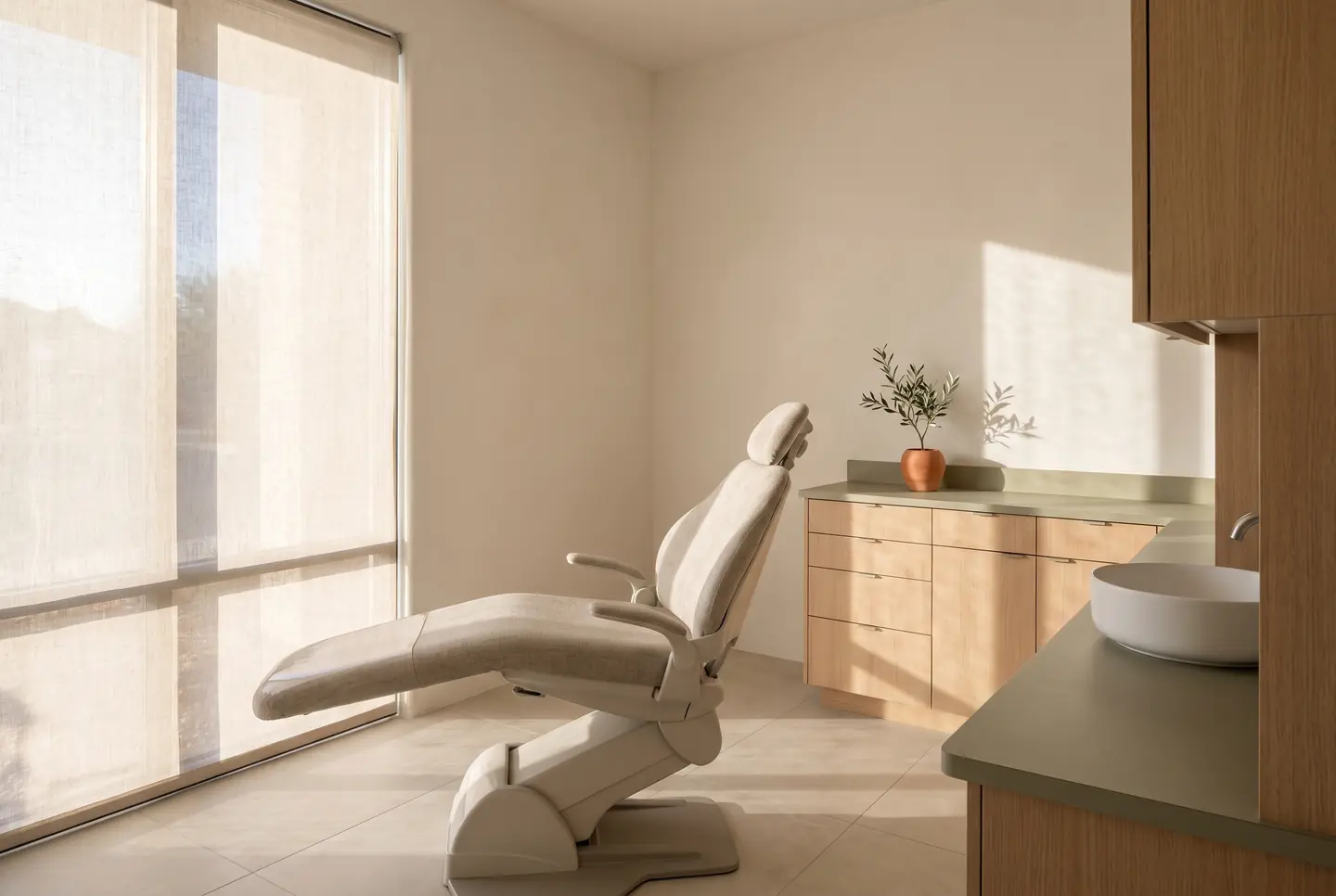
Bonding, veneers and crowns sit on a spectrum of how much tooth is involved. Composite bonding adds material and removes almost nothing. A veneer replaces the front surface. A crown covers the whole tooth and is the most invasive of the three. The correct answer is nearly always the least invasive option that will actually hold — and one of the more common conversations we have is talking somebody out of crowns and into bonding.
The sequence
How much sound tooth remains, whether the tooth is root-treated, whether it is cracked, and how it is loaded in your bite. That decides bonding versus crown, not preference.
Composite is layered directly onto the tooth, shaped, cured and polished in a single appointment. Nothing is sent to a laboratory and almost no tooth is removed.
The tooth is reduced, scanned, and a temporary crown fitted. Modern bonded ceramics allow more conservative preparations than the metal-backed crowns most people remember.
Ceramic tried in, contacts and bite checked, then bonded or cemented depending on the material. The bite is refined with you sitting upright as well as reclined.
Instead of this
A cosmetic practice that never names the less profitable option is not giving you a choice.
Covers only the cusps that need protecting and leaves the rest of the tooth alone. Where the tooth allows it, this is the better answer, and we will propose it.
Where several front teeth need shape and shade changed together, veneers hold colour and polish far longer than composite.
A chipped composite can often be repaired in twenty minutes. Not everything needs remaking.
Before you agree
This is the part most sites leave out. It is also the part that a consent discussion is legally and ethically built on.
Fee
Composite bonding, per tooth. Ceramic onlay $1,250. Full ceramic crown $1,550. Members receive 15% off all restorative fees.
Indicative. Your written plan is itemised and is produced only after an examination. Members take 15% off restorative fees. We are out of network; you receive a coded receipt for out-of-network reimbursement.
A word on language. You will not read the word “painless” on this site, and you will not read that any restoration is permanent. Local anaesthetic makes most treatment comfortable at the time; some procedures are sore afterwards and we will tell you which and for how long. Restorations are maintainable, not eternal. Anyone promising otherwise is selling rather than consenting.
Questions
If one or two edges need repairing and the shade is good, bonding — cheaper, reversible, one visit. If six or eight teeth need shape and shade changed as a set and you want it to hold for a decade, veneers. We will show you both on a mock-up.
Commonly five to seven years before it needs replacing, less at a biting edge in someone who grinds, more on a low-load surface. It is a maintainable restoration rather than a definitive one, and that is a reasonable trade for the cost and the tooth it preserves.
On a back tooth, usually yes. Root-treated molars that are left uncovered fracture at a much higher rate, and a vertical root fracture is usually the end of the tooth. On a front tooth with plenty of structure remaining, often no.
For most situations, yes. Modern zirconia and lithium disilicate ceramics have strength figures that comfortably cover normal function. Material choice depends on the tooth, the load and how much the shade matters.
Related
$190, credited against treatment. Scottsdale, Arizona.
Six palettes. Each one is guarded in both rooms.
A palette repaints every branded surface — header, footer, buttons, links, focus rings, gradients, icons and the scatter field — in both the light and the dark room. It never repaints the regulated notices; those keep their own printed ground on purpose.
Type, practice name, phone, email and logo are the build's own machinery rather than a visitor's choice, so they are not in here. They live behind ?studio=1.
Four controls that actually do something.
These are real settings, not a badge. This site has not been independently audited against WCAG and does not claim conformance to it.